Our solutions are built on technology from these trusted industry leaders.


A laptop keyboard collects crumbs, finger oils, and dust faster than a breakroom counter collects forgotten mugs. Most people wait until their screen looks like a thumbprinted crime scene before grabbing a random paper towel and whatever glass cleaner is sitting under the sink. That is a quick way to turn a functional $1,200 workstation into an extraordinarily expensive paperweight.
Managing dozens or hundreds of online business accounts requires a realistic security strategy. For years, standard IT policy demanded complex, highly randomized passwords that changed every few months. This approach backfired, leading to recycled password variations and severe security vulnerabilities across organizations.
It is time to discard outdated password rules. Modern password logic focuses on usable security that protects company data without creating operational friction for employees.
When a business owner looks at their monthly operating expenses, they usually keep a close eye on payroll and marketing spend. When those numbers spike, it triggers an immediate conversation. There’s one expense that quietly expands month after month, completely escaping executive scrutiny: the invisible tech taxes, like unoptimized cloud tiers, forgotten software licenses, and legacy telecom services that your business pays for, but hardly utilizes.
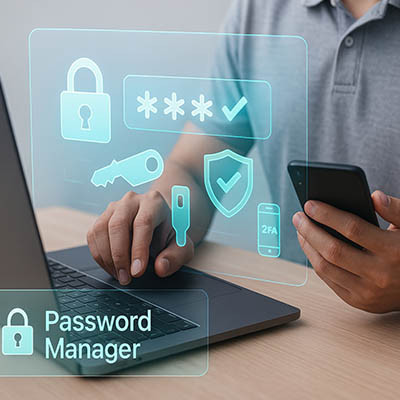
Whether you’re a business owner or office worker, you probably manage dozens of different online accounts just to get through your workweek. Yet, security best practices say you're expected to have a completely unique, complex password for every single one of them. What usually happens instead? You end up playing password roulette. You try your standard password, then the version with an exclamation point, then the one with your dog's birthday.
Before you know it, you are locked out of your account and forced to hit "Forgot Password" for the third time this week; just to log into a basic utility you use every single day. It’s frustrating, it eats up precious time, and it leads to bad habits like re-using weak passwords or storing them on sticky notes stuck to your monitor. Don’t worry… there is a better way.

It’s almost impossible to find a workplace these days where mobile devices aren’t part of the furniture. We use them for everything from checking email between meetings to approving contracts while waiting for a latte. When done right, giving your team the ability to work from anywhere is a massive win for productivity.
Most business owners I talk to have some form of backup. Maybe it's an external drive plugged into a server, or perhaps everything is saved in the cloud. While these are great starts, they often have a single point of failure. If your office has a fire, that external drive is gone. If a user accidentally deletes a folder and it syncs to the cloud, that data might be gone before you notice.
To make a backup "trustworthy," we use a framework called the 3-2-1-1 Rule. It sounds like a football play, but it’s actually a recipe for peace of mind.
In every office, there is a hero. They are the ones who clear their inbox before they leave, manage five Slack threads simultaneously, and pride themselves on a five-minute response time. We value these people because they make things happen. Unfortunately, that same high-speed, can-do attitude is exactly what hackers are looking for.
Have you ever reached for your phone to check a quick notification, only to look up forty minutes later feeling drained, agitated, and behind on your schedule? For a business owner, this is more than just a bad habit, it’s a thief. While you are busy protecting your revenue and managing your team, these habits serve as an invisible tax on your focus.
We’ve all been there. You’re flying through your inbox, trying to reach inbox zero before a meeting, and you click a link in a shipping notification. The page doesn't load quite right. You stare blankly and your anxiety spikes.
That moment happens a lot and it is a fork in the road for your company’s security. In many organizations, that employee’s next thought isn’t: “I should report this,” it is: “If I tell anyone, I’m going to get fired.”
Moving to the cloud is supposed to be the action any business can take to help them scale aggressively. For most companies, it comes with a fair amount of waste. Imagine signing up for a pay-as-you-go gym, but they keep charging you for classes you forgot to cancel and lockers you aren't using. That’s effectively what cloud waste is; a sad, empty locker you pay for.
Any business can face a variety of disruptions, from natural disasters to cyberattacks. While many organizations understand the importance of preparing for the unexpected, not all of them have a solid plan in place. A well-crafted business continuity plan (BCP) is crucial for protecting your employees, customers, and bottom line.
Here are some key dos and don'ts to consider when creating your business continuity strategy.
Cyberattacks aren't just something that happens to other people, they’re a real-world threat to businesses, individuals, and even governments. Hackers are smart, sneaky, and persistent. The good news is that with a little strategic effort, you don't have to be helpless. Employing the right habits and strategies can help make it very hard for hackers to mess with you. In this month’s newsletter, we talk about how to get better at keeping hackers out of your network.
Cyberthreats aren’t just occasional inconveniences, especially nowadays. They are constant, evolving, and some are so highly sophisticated that you can hardly blame yourself if you fall victim to them. This is why proactivity is so important. Businesses that take a reactive approach to cybersecurity find themselves in a never-ending cycle of damage control. Without a purposeful cybersecurity strategy, any organization faces recurring breaches, data loss, and ultimately a situation where customer distrust can result in the company's financial ruin. This month, we thought we would take a look at why having a comprehensive cybersecurity strategy that addresses these risks is so critical for the modern business to accomplish.
We manage all types of files in the course of doing business. Some are more important than others and often need better security, and they need to be filed a certain way so that retrieval is fast and painless. Today, we will go through three of the best practices in file management to help you get a better handle on the ever-growing amount of data you have to store.
Your business requires you to make certain compromises. Still, when it comes to building a network of vendors that can help you realize your goals, you have to take some time and carefully select the people you want to have long-lasting relationships with because constantly changing vendors can cause plenty of problems for you. In this month’s newsletter, we discuss how to get the most out of your vendor relationships.
Technology is central to most businesses, which means that security is, by proxy, central to them as well. With cyberattacks on the rise, it’s more important than ever for you and your employees to be on the same page regarding cybersecurity. Today, we are looking at four ways you can ensure sound cybersecurity practices that even the most belligerent employees can follow… with the right support in place.
Every business has to choose how they network their office. Most businesses choose the ease and convenience of wireless networking to allow their employees the freedom to use their mobile devices, IoT tools, and other devices. This month, we look at some of the best tips for setting up your organization’s Wi-Fi network.
Get the Knowledge You Need to Make IT Decisions
Technology is constantly evolving, and keeping up can feel overwhelming. Whether you want to understand cybersecurity threats, explore automation, or learn how regulations like PCI DSS impact your business, we’ve made it easy to access clear, straightforward insights on key IT topics.
Learn more about what Telesys IT Services can do for your business.
Fort Worth - (817) 590-9339
Dallas - (972) 398-0818
Austin - (512) 899-1800
Telesys IT Services
6840 Boulevard 26
Fort Worth, Texas 76180