
Our solutions are built on technology from these trusted industry leaders.


We’ve all been there. You’re in the middle of a proposal, or maybe you’re finally clearing out that mountain of unread emails, and a little notification slides into the corner of your screen. Updates are available for your computer.
You look at it, you look at your to-do list, and you click Remind Me Later. Then you do it again the next day. And the day after that. That Remind Me Later button is essentially a Leave the Front Door Unlocked button.
Is your business data hard to get to, like it's locked away and only a few people have the key? That can really hold your business back. Imagine if everyone on your team could easily use all the data you create and collect to make better decisions, faster. That's what data democratization is all about, and it’s a powerful tool. In today’s blog we briefly discuss how it works.
We manage all types of files in the course of doing business. Some are more important than others and often need better security, and they need to be filed a certain way so that retrieval is fast and painless. Today, we will go through three of the best practices in file management to help you get a better handle on the ever-growing amount of data you have to store.
Today’s business needs to be able to share files and data securely and efficiently. This process may seem straightforward, but there are a lot of options that the business owner or manager needs to understand. In today’s blog, we look at some steps that will help you create a strong and secure file-sharing system.
As technology continues to gain prominence in healthcare, it plays an increasingly vital role. Advancements in technology have allowed the healthcare industry to stabilize costs, improve access, and personalize care delivery—objectives that were challenging in the past. These benefits come with a potential downside: data privacy issues, which are becoming more concerning as technology advances.
There’s no doubt that data is valuable. It can improve many different aspects of a business, most notably operations, customer relations, and marketing. The more data you have, the more specific actions you can take to improve your business. But it can also be a real problem if you don’t have a plan for managing it. Let’s discuss some problems your data can present and how to avoid them.
Big data has become an invaluable asset, not just for large corporations but also for small businesses. Using the vast amounts of data your business creates to help you make more effective decisions is easier than ever. In this month’s newsletter, we’ll look at how small businesses are tapping into the power of big data:
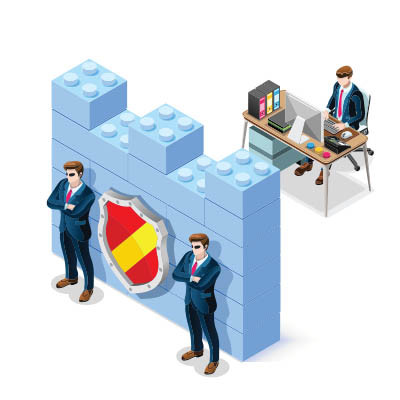
Firewalls are a mainstay of network security. At its core, the firewall acts as a barrier between a trusted internal network and untrusted external networks, such as the Internet. Its primary function is to monitor and control incoming and outgoing network traffic based on predetermined security rules. Think of the firewall as a gatekeeper scrutinizing every packet of data that attempts to pass through. Let’s take a look at the different types of firewalls and some of their key functions.
Cybersecurity is crucial for everyone to focus on, both in the professional environment and in their personal lives. That’s why I wanted to put together a list of cybersecurity practices you should encourage your team to follow when they aren’t in the office or working remotely, when their time is theirs.
All it takes is one oversight to potentially undo any benefits your cybersecurity protections and other best practices may deliver. For instance, even if you have things like multifactor authentication in place, a phishing scam or even some malware varieties could potentially give an attacker access to your email… and all the data your messages contain, just sitting in your inbox.
A digital twin could arguably be seen as a somewhat niche technological innovation. Regardless, they are an invaluable resource to quite a few industries that help the businesses that use them optimize their processes. Let’s go over what a digital twin is, and how it helps a few different business types meet their needs.
Data Backup and Disaster Recovery are essential components of any modern business. As businesses become increasingly reliant on digital data, it's essential to have strategies in place to ensure that your data is safe and secure in the event of a disaster. Let’s cover the key components of an effective Disaster Recovery strategy to ensure the safety of your business' data backup. Read on to learn more about Disaster Recovery strategies and how to best protect your business data.
When it comes to valuable data, hackers will go out of their way to try and steal it, placing businesses in dangerous situations. In particular, healthcare data is attractive to hackers, and considering how lucrative the prospect of healthcare data is, companies need to take extra precautions to protect it. But what is it about healthcare data that makes it so attractive, anyway? Let’s dig into the consequences of potential attacks on healthcare data.
Get the Knowledge You Need to Make IT Decisions
Technology is constantly evolving, and keeping up can feel overwhelming. Whether you want to understand cybersecurity threats, explore automation, or learn how regulations like PCI DSS impact your business, we’ve made it easy to access clear, straightforward insights on key IT topics.
Learn more about what Telesys IT Services can do for your business.
Fort Worth - (817) 590-9339
Dallas - (972) 398-0818
Austin - (512) 899-1800
Telesys IT Services
6840 Boulevard 26
Fort Worth, Texas 76180